ON LILA’S GEM

December 31, 2025

January 1, 2026

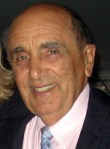
This one is personal. Very personal. I rarely talk about our grandkids (there are three) but every now and then, something comes up that catches my fancy.

Five years ago, at age 11, our granddaughter Lila Theodore wrote the following essay for class where she was asked to “reflect on a time when you were intellectually challenged, inspired, or took an intellectual risk – inside or outside the classroom. How has that experience shaped you?”

Her essay follows:

“Do you want to co-author a book?” my grandpa asked.

On a sunny June afternoon during the first year of the COVID-19 pandemic, I was lounging on my grandparents’ red brick patio. We had just finished a meal, our weekly pandemic tradition. My grandfather had retired from his job as a professor many years ago, but instead of fully retiring, he continued writing books on topics that he is interested in (although not always an expert), which range from chemical engineering to basketball. He had grown interested in infectious diseases and wanted to put together a reference guide on pharmaceutical companies.

I said yes to co-authoring this book without fully realizing how much of an intellectual challenge I had just taken on. This was something outside of  my comfort zone, especially since I had never done research on that scale, and I was only eleven years old. It was intimidating that my writing would be published and distributed, especially on a topic that I knew little to nothing about. I also wondered if I really wanted to spend a good chunk of my summer researching the very thing that was making my life miserable:  infectious diseases! Still, it was an amazing opportunity. I was in the midst of a quarantine, but there wasn’t much else to do. So, I accepted.

While I had always enjoyed writing, this was a major new challenge: there was a huge amount of work, there were hard deadlines, and in the end my work would be published. The thought of anybody being able to read this book with my writing in it was a bit scary. My part of the book was to research pharmaceutical companies and write short company profiles. At first this research seemed a little bit boring, and after my first few pharmaceutical companies, I wondered how I would get through the dreadfully long list.

After I had gotten into the flow of it, though, I started to enjoy it. In the beginning I thought of pharmaceutical companies as being these abstract anonymous things, and I knew my audience might think that way as well. As I worked my way through the list, I became interested in all of the individual stories of people who did research, invested things, started companies, went bankrupt, profited from unethical practices, and so on. I knew that my writing challenge would be to make my readers aware of the fascinating and sometimes shocking history of pharmaceutical research.

There was also something empowering about this work: being able to plan out a large project, stretch my writing skills, and making the deadline made me proud, even if I did hit a few bumps along the way. And, it gave me the opportunity to better understand some of the aspects of the disease that seemed to completely dominate my life at the time. The risk I took when I was eleven years old helped me become a better much more organized and responsible researcher and writer.

*****

NOTE: The book “Virus Contacts: Agencies and Organizations” was published by Amazon. It serves as a research guide for the practitioner and traveler.

Visit the author at:

www.theodorenewsletter.com

and / or

Basketball Coaching 101 on Facebook

NEXT POSTINGS

FEBRUARY 1:          On Purely Chaste, Pristine and Random Thoughts XXXVIII

MARCH 1:                 On the Ultimate Quiz

APRIL 1:                    On Dining Out


ON TECHNICAL WRITING

April 1, 2024

April 1, 2024

I once humorously offered this comment to my students: “either you’re from Harvard and can’t count or from MIT and can’t write”.  The comment was made to introduce the difference between non-technical writing and technical writing.

Well, what about the difference? The non-technical and technical material are written in contrasting styles. Technical pieces are written in a factual, ‘dry’ style, emphasizing quantitative analysis, whereas the non-technical passages contain numerous adjectives and modifiers. Similarly, engineering texts I’ve written, (149) have one thing in common: they contain a minimum of pictures and graphs, usually in black and white. Non-technical texts, by contrast, contain numerous color pictures and graphics. The contrast in style between the two is reminiscent of the contrast between a black and white “how to” video, and a high-budget movie. Naturally, the engineering texts use a pragmatic and mechanistic approach, while the non-technical books have a philosophical bent, or what I define as the liberal arts approach. Further, one generally transmits information while the other entertains. In any event, this article is concerned with technical writing, a topic that should be of interest to many of the readers.

Technical writing really isn’t that difficult; it is NOT a talent that only a handful of people are born with. With that in mind, here are a few basic rules (a baker’s dozen) that can transform one’s writing from a confusing, garbled mess into something that will impress readers.

  1. If applicable, know thy reader(s).
  2. It helps if the subject has not been written about before. If it has, improve what is available by editing, rewriting, expanding, and updating. There should also be an element of interest to the reader(s).
  3. Prepare an outline. This should include an appropriate title, objective(s), introduction, background, results, conclusion(s), and recommendations(s).
  4. Improve the foundation of the outline by filling it in with notes and sentences.
  5. Keep related ideas together and establish a logical flow from paragraph to paragraph and section to section.
  6. The abstract or executive summary (for technical reports) is the most important part of the writing. Spend a significant amount of time here. It is the only material that is read by the majority of the readers. The reader (perhaps your immediate supervisor) can then decide whether to go deeper into the writing. This is very important: the abstract should contain a brief summary of the report without referring to the main body of the report.
  7. Sentences should contain little to no unnecessary words; paragraphs should contain little to no unnecessary sentences. One certainly would have no unnecessary lines in a diagram or unnecessary parts in a machine.
  8. The swan song of the successful writer is: revision, revision, revision. Start early, e.g., weeks before it is due and / or submitted. Get colleagues, friends, your wife (my usual option), to review and critique your material.
  9. If your “report” is a resume, make sure it is current. Be prepared to tailor your resume to the individual reviewing it. And, don’t be bashful. I often refer to myself as “the foremost environmental authority in the world.”
  10. If there is a Table of Contents, list every section title and heading starting with page 1, not page I, and give the number of the page on which it appears.
  11. If there is a Statistical Error Analysis, it must be written with opening and closing paragraphs. It should include theoretical equations along with written explanations, and conclude with a discussion of the numerical values determined from the error analysis.
  12. Conclusions and recommendations (if required) are just that. It is generally written as an extended paragraph even though it is often a series of loosely related topic sentences.
  13. References may be required. Footnotes are not commonly used in technical literature. All of the references cited in the report must be listed at the end of the report and (my preference) in the order of their appearance.

I hope this helps. In the final analysis, the more one reads and writes, the easier it becomes. It is like tying shoes or riding a bike; it’s a little hard at first, but once mastered it will never leave you.

Visit the author at:

www.theodorenewsletter.com

and / or

Basketball Coaching 101 on Facebook

NEXT POSTINGS

MAY 1;                      On Hello Baseball and Goodbye Basketball

JUNE 1:                      On Purely Random, Pristine Thoughts XXXVII

JULY 1:                      On Boxes