ON LILA’S GEM

December 31, 2025

January 1, 2026

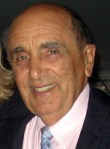
This one is personal. Very personal. I rarely talk about our grandkids (there are three) but every now and then, something comes up that catches my fancy.

Five years ago, at age 11, our granddaughter Lila Theodore wrote the following essay for class where she was asked to “reflect on a time when you were intellectually challenged, inspired, or took an intellectual risk – inside or outside the classroom. How has that experience shaped you?”

Her essay follows:

“Do you want to co-author a book?” my grandpa asked.

On a sunny June afternoon during the first year of the COVID-19 pandemic, I was lounging on my grandparents’ red brick patio. We had just finished a meal, our weekly pandemic tradition. My grandfather had retired from his job as a professor many years ago, but instead of fully retiring, he continued writing books on topics that he is interested in (although not always an expert), which range from chemical engineering to basketball. He had grown interested in infectious diseases and wanted to put together a reference guide on pharmaceutical companies.

I said yes to co-authoring this book without fully realizing how much of an intellectual challenge I had just taken on. This was something outside of  my comfort zone, especially since I had never done research on that scale, and I was only eleven years old. It was intimidating that my writing would be published and distributed, especially on a topic that I knew little to nothing about. I also wondered if I really wanted to spend a good chunk of my summer researching the very thing that was making my life miserable:  infectious diseases! Still, it was an amazing opportunity. I was in the midst of a quarantine, but there wasn’t much else to do. So, I accepted.

While I had always enjoyed writing, this was a major new challenge: there was a huge amount of work, there were hard deadlines, and in the end my work would be published. The thought of anybody being able to read this book with my writing in it was a bit scary. My part of the book was to research pharmaceutical companies and write short company profiles. At first this research seemed a little bit boring, and after my first few pharmaceutical companies, I wondered how I would get through the dreadfully long list.

After I had gotten into the flow of it, though, I started to enjoy it. In the beginning I thought of pharmaceutical companies as being these abstract anonymous things, and I knew my audience might think that way as well. As I worked my way through the list, I became interested in all of the individual stories of people who did research, invested things, started companies, went bankrupt, profited from unethical practices, and so on. I knew that my writing challenge would be to make my readers aware of the fascinating and sometimes shocking history of pharmaceutical research.

There was also something empowering about this work: being able to plan out a large project, stretch my writing skills, and making the deadline made me proud, even if I did hit a few bumps along the way. And, it gave me the opportunity to better understand some of the aspects of the disease that seemed to completely dominate my life at the time. The risk I took when I was eleven years old helped me become a better much more organized and responsible researcher and writer.

*****

NOTE: The book “Virus Contacts: Agencies and Organizations” was published by Amazon. It serves as a research guide for the practitioner and traveler.

Visit the author at:

www.theodorenewsletter.com

and / or

Basketball Coaching 101 on Facebook

NEXT POSTINGS

FEBRUARY 1:          On Purely Chaste, Pristine and Random Thoughts XXXVIII

MARCH 1:                 On the Ultimate Quiz

APRIL 1:                    On Dining Out


Hello Baseball, Goodbye Basketball

April 30, 2025

May 1, 2025

In case you are keeping score, I did have winners each of the last three seasonal sports bets. But I still wound up losing. There is no concern since I had a really solid run the last four years, particularly with college basketball.

  1. College basketball 2024-25: I saved some with Florida but had too many early losers along the way.
  2. Pro Football 2024-25: This was a wipeout, but granddaughter Lila saved with the Eagles.
  3. Baseball 2024: The Dodgers really hurt me but I recovered some along the way.

But these three events are behind us, and it is now time to talk baseball, and this season’s baseball bets.

Once again, keep in mind that there are primarily two types of bets available in sports betting: the point spread and the money line. My recommendation is future bets (that I refer to as seasonal bets). These are bets on a team or individual winning a championship, league, division, award, etc., and the good news is that each of these bets (hopefully) applies over an entire season. In baseball, it is who is going to win the World Series, League or Division, as well as under / over on games won for the season.

Here is what I have for this season:

  1. Naturally, the Mets to win the WS at 15-1. I do think Diaz will again disappoint and their manager is a major liability.
  2. Kansas City Royals. I have them over at 83.5 (of 162 games) and also placed taken bets to win their Division, League, and WS.
  3. (Oakland?) Athletics. I have them over at 71.5 with really token bets to win their Division and League.

Do I have any additional suggestions? Of course I do! I’ll probably be putting some money on Baltimore (currently in last place) and L.A. Angels (in second place). I’m also looking at Cleveland and Minnesota in the AL Central Division.

At the local level (for me), this month is decision time on the East Williston School District budget and Board members. Every parent, every senior, every taxpayer, and every youngster of voting age should consider what information is presently available. Our cost per student is nearly 50% above surrounding schools; it is also nearly 50% below other student / teacher ratios. You don’t need a Ph.D. to figure out we are being ripped off by not only the teachers and their union, but also their compliant Board. School taxes and a sinking U.S. News & World Report ranking are now a negative impact on home values.

I recently had lunch with a retired 20+ year EWSD teacher. On mentioning that I have been at “war” with not only the EWSD Board but also their teachers and union, she offered this. “I was always very disappointed with the senseless waste, overstaffing and bloated administration. Their greed still bothers me.” She asked that her name be withheld because she was still on speaking terms with many members of the staff.

Her comments complimented legendary Mathew Haig’s 9/23/23 “white paper” on the defense of his colleague Wes Berkowitz. “We became the envy in our reputation for intellectual creativity and student-centered challenge became well-known, especially in circles of the finest colleges and universities in the country. Beginning in the first decade of the 21st century, the East Williston educational culture began to shift. New school board leadership changed in its fundamental educational disposition … and abandoned its longtime commitment to a ‘whole-student,’ humanistic approach to learning … and foolishly shifted to one based upon statistical analysis, and test-driven measures of both student and teacher achievement … By the first decade of this century, senior teachers, like myself, who saw what was happening to professional morals, its deleterious effect on teacher-student life, and who cared enough to speak out, were targeted. Not coincidentally, over this same period of unfortunate ‘transition,’ Wheatley’s national educational ranking and reputation began a precipitous decline … The second decade of the 21st century began, some of these ‘carpet-bagger’ administrators began to jump ship. They had used East Williston, and Wheatley, for what remained of its once sterling reputation … and now were doing what had rarely been done before in our history … move to districts where they perceived that ‘the pastures were greener’ … Her boorish administrative style had imposed upon Wheatley an abhorrent culture of professional dismissiveness and disrespect never before seen in our district … but, unfortunately, one that took firm root, and persists until today. Today, all Wheatley teachers have to be careful. ‘Instructional staff’ is admonished by Wheatley administrators, not to reach out to students in distress and anything more than directions to the school psychologist’s office, or to the guidance department — Don’t hug them … don’t touch them … don’t offend them … don’t make them feel uncomfortable … don’t express your own opinions … don’t characterize their behaviors … don’t bully them … don’t counsel them.” I think Mr. Haig hit the nail on the head – I could not have said it better.

So, I will once again be voting NO on the budget. And, yes, it’s okay to vote NO. Our kids really deserve better than what has been thrust upon us.

Visit the author at:

www.theodorenewsletter.com

and / or

Basketball Coaching 101 on Facebook

NEXT POSTINGS

JUNE 1:          On Memorial Day VIII

JULY 1:          On a Paradise Lost

AUGUST 1:    On the Ultimate Quiz IV


On Sleep Apnea III

February 1, 2025

February 1, 2025

Sleep apnea is a disorder of the respiratory system in which breathing ceases for a period of a few seconds before resuming. Such periods, which may also occur during sleep, are sometimes alternated with periods of rapid, heavy breathing known as hyperpnea.

On a personal level, I snore. But what’s worse is that I suffer from apnea, a term which means “no air.” It seems nearly one in three Americans snore and one in ten have sleep apnea.

Well, is it a nuisance or is it a health concern? The answer: both. Most of us know that snoring can be extremely bothersome to your bedroom partner if he / she is not a sound sleeper. The snoring occurs when your breathing airway is partially obstructed by tissues (that may vibrate) near the pharynx in the back of the mouth. Alternately, the air passage may be extremely narrow or partially blocked; a small jaw can also cause problems. Thus, anything that narrows the breathing airways can cause snoring. In these cases, the noise usually ends when the problems are addressed.

When total blockage occurs, it is defined as the aforementioned sleep apnea. Breathing ceases at this point and the individual is deprived of oxygen. Individuals on average can suffer from a few to a hundred of these episodes per hour. This in turn leads to an increase in blood pressure. Although the apnea effect may only last a few seconds, this starting-and-stopping process can lead to a heart attack, stroke, hardening of the arteries, or kidney failure. In addition to these problems, sleep apnea can cause difficulty in reasoning, short-term memory loss, headaches, muscle pain, depression, and slow reflexes.

From a medical perspective, the delivery and deposition of oxygen to the heart is a requisite to sustaining life. The breathing process provides the regular and continuous requisite supply of oxygen content of the air to various locations within the body.

One of the oxygen passageways to the lungs is the pharynx (often referred to as the windpipe); its opening is ½ inch in diameter. However, the passageway can be partially blocked by muscle tissue at the entrance to the windpipe. This tissue normally hangs loosely in the pharynx during most hours of the day. During sleep, particularly when one is dozing face up, the tissue can flop downward due to the force of gravity and partially (or totally) block the opening.

The blockage phenomenon also arises because muscle tissues in the uvula at the back of the throat and the entrance to the pharynx can sag under the force of gravity. This effect may be exasperated due to a similar action at the epiglottis.

When blockages occur, the resistance to the flow of air in the passageway increases, which in turn reduces the flow of air to the lungs. This sleeping disorder process has come to be defined as the aforementioned sleep apnea.

There are several possible solutions to sleep apnea.

  1. The first is to sleep on one’s stomach with a prop pillow to support one side of the face. This prop pillow can be similar to a doughnut used by a pregnant woman to relieve pressure from one side of her body. By sleeping on the stomach, the gravitational effect on the trachea and any blockage of the airway will be minimized or eliminated.
  2. The second possible solution is to insert a mouthpiece similar to that of a wrestler or boxer. This mouthpiece forces the mandible jaw to remain in the forward position which keeps the airway open during the course of the night. Your dentist can also provide a soft plastic device that can be custom-fashioned to hold both the jaw and tongue forward during sleep. This solution may cause some discomfort to the patient and is not recommended for all individuals.
  3. Use adhesive plastic strips to hold the nostril (more) open. This solution helps to reduce the resistance of flow to the lungs.
  4. The treatment by somnoplasty, a procedure that employs radio frequency energy to treat the affected area in the air passage. Here, an automated radio frequency control delivers a measured amount of thermal energy to a specific area at the back of the mouth. The process effectively burns off the unwanted fat and / or tissue without damaging the throat lining. Somnoplasty usually takes less than five minutes and can be performed in a doctor’s office.
  5. The fifth solution is a lifestyle change, and only pertains to some sufferers of sleep apnea. Changes that include: eliminating the use of alcohol and other depressants, loss of excess weight, and maintaining regular sleep times. Depressants such as alcohol relax the muscle cells of the trachea, causing them to partially collapse and prohibit the flow of oxygen. Eliminating these drugs can lower the occurrence, or even prevent sleep apnea in some patients. Losing excess weight can lower the risk of sleep apnea because, if the trachea is made up of less fatty cells, it will have less tendency to collapse during sleep. By maintaining regular sleep times, the effects of extreme fatigue on the muscle cells in the trachea can be minimized. Two other lifestyle changes can include: smoking cessation and avoiding unhealthy snacks before sleep.
  6. The new kid on the block (this year) prompted the writing of this article involves using an expensive (relatively speaking) simple strip across the mouth that forces one to breath through the nose. The inventor claims that it will solve the apnea problem.

Well, that is what is out there in terms of solving the apnea problem. What do I recommend, you ask? My solution earlier first employed process (3), which was followed by (2). Both, at best, marginally solved my problem. Process (1), which I first recommended 20 years ago, did the job. It is what I recommend, and don’t tell me you can’t sleep face down! I presently continue to employ (1) and have no plans to visit a sleep apnea doctor; and, I have no plans to use process (6).

I hope the above helps some of you.

Visit the author at:

www.theodorenewsletter.com

and / or

Basketball Coaching 101 on Facebook

P.S. My talk on casino gambling scheduled for Wednesday, February 5th has been cancelled and rescheduled for Thursday, April 10th.

NEXT POSTINGS

MARCH 1:     On Purely Chaste, Pristine and Random Thoughts XXXVII

APRIL 1:        On Great Eats VI: Hamburgers

MAY 1:          On Hello Baseball, Goodbye Basketball


ON MY KEYS TO LONGEVITY

January 1, 2025

January 1, 2025

I’m now in the last decade before officially becoming a centenarian. A host of people have questioned my secrets on longevity. (Webster simply defines longevity as: “length of life.”) Could it be genes? Maybe. But, then again, maybe not. If not, what then?

Here are my half-dozen keys to longevity. This is followed by a host of other “minor” suggestions that one might consider.

  1. WALK! This is the most important of my 6 keys. Up until this year, I walked a mile at a leisurely pace in the morning (on awakening) and at night (following dinner). It’s now down to the morning walk and a 1/8 to 1/4 mile at night. I also do a few deep knee bends and seven pushups in the morning. I also try to walk 25 to 100 feet several times in between these walks. If you choose to run, don’t run too far, and don’t overexert. The important thing is to get all parts of your body moving without putting any excessive pressure on other parts of your body. Don’t bypass this key; as I indicated above, I believe it is the most important suggestion you will find in this article.
  2. DRINK WATER. Lots of it! Water is the common name for the liquid state of the hydrogen – oxygen compound H2O. It is the major constituent of all living matter. Approximately 75% of the weight of living organisms is water. It plays an important role in the metabolic breakdown of protein and carbohydrates in our system and has been defined by many as the “universal solvent.” Did I say drink lots of it? Well, if you’re not feeling well, I suggest you drink even more of it. I believe that it helps flush out the evil demons within us when ill. Colleague and former student John McConway suggests drinking the water at ambient temperature (no ice) and with a glass (not a bottle) to reduce the resistance to flow. A good idea. Remember, it’s water – not coffee, tea, soda, etc.
  3. DON’T SMOKE, DRINK ALCOHOL OR TAKE DRUGS. I smoked for one year during my mid-twenties. You will be spared of the tales of the effects of smoking on some of my friends. I drank alcoholic beverages for approximately 25 years but haven’t had a drink since 1977. And I don’t miss it. I guess alcohol in moderation would be okay, but given a choice, I wouldn’t drink. As you might suppose, I have never done drugs in any manner or form. I think those that do are playing with fire.
  4. TAKE DEEP BREATHS. I do just this on awakening and prior to going to sleep. Oxygen is the most abundant of all the elements known to man. It composes 23% by weight of the atmosphere, 86% of the oceans (98% of pure water is oxygen); and, as a constituent of most rocks and minerals, 47% of the solid crust of the earth. Oxygen comprises 60% of the human body. It is a constituent of all living tissues; almost all plants and animals, including all humans, require oxygen to maintain life. Oxygen is administered medicinally to patients whose respiratory functioning is impaired and is supplied to individuals in aircraft flying at high altitudes where the concentration of oxygen is insufficient to support the normal respiratory process. I suggest the aforementioned deep breaths be taken through the nose. You might also consider doing it during the middle of the day.
  5. MAKE OTHERS HAPPY. Since the mid-1970s when I survived a fierce battle with depression, I have attempted to make someone happy every day of the year. How, you ask? By saying thank you whenever the occasion arises. By complimenting people. By overtipping the waiter and commenting on the services. By tipping the bus boy. By tipping anybody who has gone out of their way for me, etc., etc. It really is a good feeling.
  6. MAINTAIN TIES WITH IMPORTANT RESOURCES. The resources would, of course, include your physician(s), dentist, psychiatrist, hospital, etc., at the medical level. But also maintain ties and surround yourself with individuals (and things) that are happy, smart, kind, positive, and (most importantly) funny. There are few things that beat a good laugh.

As you might suppose, there are other things that you should consider doing. Some of my other “favorites” are listed below.

  • Read.
  • Get educated.
  • Try writing or painting. I don’t paint. But I did get educated to a point where I have written 117 books…plus nearly 200 articles for my monthly newsletter.
  • Drive defensively.
  • Vacation occasionally. A change of pace is good but there is nothing like home.
  • Slow down and get rid of that protruding belly.
  • I’ve been successful in minimizing sugar and salt intake.
  • Expose yourself to extreme temperatures on a regular basis; cold during the winter and heat during the summer.
  • Stay away from snacks. I guess a small snack on occasion is ok.
  • Wed later rather than earlier in life. I got lucky. Girls didn’t want to know me. Then – and I still can’t believe it – I hit the jackpot.
  • Don’t overextend exercising. On the other hand, Mary does just the opposite.
  • Do puzzles. Newsday provides a crossword puzzle, a Jumble, and 2 crypto quotes.
  • I’ve been on a diet the last 13 years. It consists of 600 – 800 calories one day per week.

Back to longevity. Lifespan is the length of time that embraces all the events of one’s life, from conception to death. The maximum lifespan for humans has not changed significantly in the last several centuries. The average lifespan, however, has increased greatly for persons living in industrialized countries. The average lifespan has risen from nearly 40 years of age at the end of the 18th century to about twice that age today. And, the average lifespan of American women now exceeds that of American men by approximately seven years. Interestingly, humans have the longest average lifespan of almost all mammals. The longest living animal is the giant tortoise, which is believed to attain a maximum age of about 200 years. Some plants, such as trees, however, live much longer than any animal; redwoods, for example, may live for more than 3000 years!

How about you in the reading audience? Any comments? Any contribution(s)? I’d appreciate some help here.

Visit the author at:

www.theodorenewsletter.com

and / or

Basketball Coaching 101 on Facebook

Note:   I will be presenting an encore (by popular request) seminar tutorial on gambling (particularly dice) based on my book Winning at Casinos on February 5 at the Village of East Williston Library, 2 Prospect Street, East Williston, at 7:00pm.  Entry is free and refreshments will be served.

NEXT POSTINGS

FEBRUARY 1:          On Sleep Apnea III

MARCH 1      :           On Purely Chaste, Pristine and Random Thoughts XXXVII

APRIL 1:                    On Great Eats VI: Hamburgers


ON THE ULTIMATE QUIZ VIII

October 1, 2024

October 1, 2024

This 8th edition is a tough one. You are once again asked to provide the correct answer to the following 20 questions. Credit 5 points for each correct answer. A grade of 65 indicates you are brilliant.

  1. What New York mayor in my earlier days died penniless in a poorhouse on the Bowery?
  2. Who gets credit for: “I didn’t lose the gold, I won the silver.”?
  3. What famous boxing arena in the 40’s and 50’s was located on 66th Street and Columbus Avenue in Manhattan?
  4. Manhattan College is located in what borough?
  5. Who was the first woman to swim the English Channel?
  6. What beautiful national park is located in northern Montana?
  7. What company owns the casino / hotel in Monticello in upstate New York?
  8. Explain the difference between a micron and a micrometer.
  9. Who was Don Larson’s opposing pitcher when he threw his now famous World Series no-hitter?
  10. Who was our second President?
  11. Approximately how many books has your favorite author written?
  12. Who said: “Kind words can be short and easy to speak, but ten echoes are truly endless.”?
  13. What borough was home to the legendary Killeen’s Tavern basketball team of the 1950s and 1960s?
  14. Who do we credit for: “My only concern was to get home after a hard day’s work?”
  15. What thoroughbred racetrack is located adjacent to the New Jersey shore?
  16. Who uttered the phrase: “The hardest years in life are those between 10 and 70.”?
  17. I know I used this before, but it really is a great trivia question. During my formative years, who played for the New York Knicks, the Brooklyn Dodgers, and the New York Rangers?
  18. Here’s another one that was used before. Who won a gold medal in the Olympics, wrote the second best-selling book of all time, and ran for President of the U.S.?
  19. Who do we credit for: “Smoking kills. If you’re killed, you lost a very important part of your life.”?
  20. You want Greek food? What location in the Metropolitan area offers the “best bang for your buck?”

EXTRA CREDIT:

21. Explain A.I. in layman’s terms.

ANSWERS:

  1. Fiorello LaGuardia.
  2. Michelle Kuan at age 17 (figure skating).
  3. St. Nicholas Arena.
  4. It is currently located in the Bronx. It was originally located in Manhattan when it was founded over a century ago. And, was recently renamed Manhattan University.
  5. Getrude Edelle. A neighbor from my earlier days in Hell’s Kitchen. I believe she swam it sometime during the 1930s.
  6. Glacier National Park. Breathtaking. We visited there twice.
  7. Resorts International. It’s a place I visit several times a year. It is the smallest casino I’ve ever been to.
  8. There is no difference. It is one millionth of a meter.
  9. My favorite pitcher of all time – Sal Maglie.
  10. John Quincy Adams.
  11. 150. I think the exact number is 152.
  12. Mother Teresa.
  13. Queens. The exact location was Astoria – 24th Street and Ditmars Blvd.
  14. Rosa Parks – who refused to give up her seat on a bus to a white person in 1955. Bravo Rosa.
  15. Monmouth Park in Long Branch, NJ.
  16. Helen Keller, who was both deaf and blind from infancy.                                                                                                                                                       
  17. Gladys Gooding. She “played” the organ.
  18. Benjamin Spock, a baby doctor.
  19. Brooke Shields, an actress.
  20. Astoria, Queens. You simply can’t go wrong there.
  21. Full credit. I have no idea but here’s what my 15-year-old grandson gave me. Artificial Intelligence or AI, is a loosely define term describing any computer system which exhibits intelligence. This could be in the form of image detection, chatbots like Open AI’s ChatGPT, or voice-based helpers like Apple’s Siri. AI’s can outperform humans in some tasks like chess, but in many others, like responding to text, are useful primarily because of their speed and low cost per use.” Ouch! Here’s my definition: “A term that has come to mean different things to different people but for me, it’s simply a gigantic computer program that can be employed to solve a near infinite variety of problems.”

Note: The seminar on my new book, Winning at Casinos; The Definitive Guide on Wednesday, September 25th, at the Village of East Williston Library went well and was attended by 25 people. Here is EW Mayor Bonnie Parente’s take on what came down: “The learn how to win at dice presentation tonight was incredibly enjoyable! It took the intimidation factor out of playing craps! This was taught by Lou Theodore and based on his book Winning at Casinos. So glad I went.”  Thank you, Mayor.

After the presentation ended, a post-Casino party was hosted by Mary and me at Spuntino’s Restaurant in Williston Park.

Visit the author at:

www.theodorenewsletter.com

and / or

Basketball Coaching 101 on Facebook

NEXT POSTINGS

NOVEMBER 1:         On My Five Wishes

DECEMBER 1:          On Hello Basketball, Goodbye Baseball

JANUARY 1:             On Sleep Apnea II


On A dozen No-No’s

August 1, 2024

August 1, 2024

Who was it that said: “The dumbest person I ever met was my father. But when I got older, and had married and had kids, my father suddenly got smarter.” But what about a guy like me? My wife claims I’m both a father (3) and grandfather (3). Maybe the time had come for me to offer some advice to the kids; after all, I’ve been around nearly a century. After some deliberation, I realized it was too late to offer anything to our kids, so I sat the three grandkids down one day and told them about my dozen no-no’s. These no-no’s were very simple grandfatherly suggestions. Their reaction appeared to be positive.

It has been 2 months since our chat and there’s been no feedback. So, I thought I might jot down my suggestions (as best as I can remember) for safe keeping. Here they are with the #1 No-No the most important to observe, and the #12 No-No the least important.

No-No 1:         No sexual activity that can result in a pregnancy.

            2:         No drinking and driving.

            3:         No drugs. These should only be used for treatment or prevention of disease. Stay away from barbiturates, sedatives, hypnotics, stimulants, hallucinogens, opioids, etc. Shame on Willie Nelson’s attempts to publicize drug use.

            4:         No carrying of weapons. It was knives, razors, and chains in my day.

            5:         No drinking to excess. The Queen and I haven’t had a drink in about half century.

            6:         No smoking (or vaping).

            7:         No tattoos. Tattooing is a method of “decorating” the skin by inserting colored substances under the surface. This irreversible action is both stupid and insane. I wear no jewelry. If one of my kids came home with a tattoo, it would be a major disappointment.

8:         No gambling to excess. This is a tough one for me since I’ve been gambling all my life. The key here is to gamble only with money you can afford to lose.

9:         No hard political or religious positions. Sorry, but I can’t help myself here with the former.

            10:       No shortcutting your education. It is absolutely imperative that you be communicate orally and in writing.

            11:       No physical or mental abuse of others.

            12:       No physical altercation(s) with others.

I hope some of the above helps a couple of my readers.

Note: The opening “quote” has been attributed to Mark Twain. However, this has been disputed in recent years.

Visit the author at:

www.theodorenewsletter.com

and / or

Basketball Coaching 101 on Facebook

NEXT POSTINGS

SEPTEMBER 1:         On Vertigo

OCTOBER 1:             On My Wish List

NOVEMBER 1:         On Hello Basketball, Goodbye Baseball

DECEMBER 1:          On the Results


ON BOXES

June 1, 2024

June 1, 2024

Traditional gambling generally refers to the wagering of money on a yet-to-be determined event or outcome that may be dependent on either chance or skill, or both. Casino roulette is a game of chance, while poker is primarily a game of skill. Gambling on athletic sporting events, such as football, basketball, baseball, etc., is generally viewed as involving both skill and chance. On to “boxes,” the title of this article, which are strictly a game of chance.

One of the major sports gambling options is to buy a “box” in a uniquely arranged square, usually referred to as the pool. An example of a pool is shown in Figure 1 for a Giant-Jet football game. As can be seen, there are 100 boxes. If each box costs $10, the total cash pool is $1,000. The individual who correctly selects the box with the last digit of the final score for each team takes home the bacon, i.e., wins the $1,000. If the final score is Jets 22/Giants 7, the owner of the shaded box is the winner. Scores, such as Jets 12/Giants 2, or Jets 22/Giants 37, would also serve as winners for that box.

             N E W    Y O R K     J E T S
N
E
W

Y
O
R
K
 
G
I
A
N
T
S
 0123456789 
0           
1           
2           
3           
4           
5           
6           
7           
8           
9           

      Figure 1: Sample Box

However, employing the format in Figure 1 does not provide each person buying a box with an equal chance of winning. Knowledgeable football fans would immediately realize that the best numbers to select in a football pool are 0 and 7, whereas the worst are 2, 5, and 8; therefore, the arrangement of the boxes as in Figure 1 does not provide each bettor with an equal chance to win. This bias can be removed, and the bet reduced to one solely of chance by assigning the numbers to each team in a random manner after individuals have paid and selected a box. The bias-removing procedure most often used is to write numbers from 0 to 9 (each) on a piece of paper. The 10 pieces of paper are then randomly drawn from a container and sequentially placed along the side of the square – first horizontally and then vertically. The result might look like Figure 2. Had the same box been selected earlier (see Figure 1), the bettor’s last team winning digits would be Giants 2/Jets 0, i.e., 2,0. A final score of Giants 42/Jets 30 would be a winner as would Giants 12/Jets 20.

  Figure 2: Sample Betting Box

              N E W     Y O R K     J E T S
N
E
W

Y
O
R
K

G
I
A
N
T
S
 2309817564 
8           
0           
3           
4           
6           
1           
5           
2           
7           
9           

Many gambling activities are available and legal in the U.S. However, the above form of gambling is not legal, although it is regularly practiced in private clubs, bars, parties, and homes with $ replaced by peanuts (or the equivalent) to legitimatize the activity. For example, the football boxes became an integral part of an annual party that I hosted at our home for the legendary Astoria Killeen’s Tavern basketball team of yesteryear (see also Basketball Coaching 101 by L. Theodore). One of the keys in this betting venture is to ensure that the individual running the box activity does it in a manner that is fair and that the odds are not heavily weighted in favor of the “concessionaire.” Generally, 5 to 10% of the total pool is considered reasonable compensation or takeout for running this “illegal” business / gambling activity. For whatever it’s worth, there was no takeout at our party, i.e., all of the money was returned to the winner.

The box activity has recently worked its way into other sports venues. And, believe this or not, the box activity is also part (recently) of gambling that takes place with the World Series. It’s just a matter of time before it works its way into all sports venues, and then onto casinos. Once again, it is the last digit of the final score of the game for each team that counts. Thus, the key box numbers for a winning final score of 20-3 is 0, 3.

What prompted the writing of this article? The Boy, the Queen and your favorite author recently shared one $10 box on the recent Superbowl at the Boy’s firehouse with the numbers 5 (KC) and 2 (SF). Remember my earlier comment that 2 and 5 are the worst numbers to draw in a football box investment. However, the final score was 25 (KC) and 22 (SF) and we wound up sharing $350.

In any event, football boxes are now commonplace. Now comes the main theme for this article – my thoughts on boxes for the future on other sports. I believe that boxes will soon be available on both basketball (both pros and college) and baseball (pros). Table 1 below provides my suggestions that includes (a) time interval, and (b) award split, based on a pool of $1,000. TBD refers to To Be Determined.

BASKETS:BASEBALL:
(I)(II)             (III)(IV)
ProsCollegesPros
(a) Quarter(b) Award(a) Quarter(b) Award(a)          Min(b) Award(a)         Inning(b) Award
 1/4100102004th200
 1/2200 1/24002020016th200
 3/4200302008th200
Final400Final400Final4009th400
OvertimeTBDOTTBDOTTBDExtraTBD

                                                             Table 1: Futuristic Boxes 

  Note that the awards can be adjusted, e.g., the entire award could be based on the final score.

Note that there are four potential box options: Three (I-III) for basketball and one for baseball (IV). Here are some explanatory details: For (I), if the score after a quarter is 32-20, the winning numbers would be 2-0 with a $200 award. For II, if the halftime score is 48-45, the winning numbers would be 8-5 with a $400 award. For III, if the score after 30 minutes is 66-65, the winning numbers would be 6-5 with a $200 award. For IV, if the runs (R) hits (H) and errors (E) after 6 innings total 11 for one team and 7 for the other team, the winning numbers would be 1-7 with a $200 award. Note that both the quarters, minutes, and RHE can be changed, as well as the award / prize.

Folks, I’m fairly certain that it’s just a matter of time before “boxes” will become part of the betting venue at sportsbooks.

That’s it. What do you think? I’d love to hear from you!

Visit the author at:

www.theodorenewsletter.com

and / or

Basketball Coaching 101 on Facebook

NEXT POSTINGS

JULY 1:                      On Purely Random, Pristine Thoughts XXXVII

AUGUST 1:                One Sleep Apnea II

SEPTEMBER 1:         On Vertigo

NOVEMBER 1:         On Hello Basketball, Goodbye Baseball


ON THE DELPHI PANEL

June 1, 2023

June 1, 2023

Delphi? A city in Greece? Yep. But this isn’t about a city in Greece. It’s about a unique and simple way to solve complex problems. So, this article is for all the readers, not just my people. And please, stay with me on this one.

Let’s start with Delphi. It was a town in ancient Greece and site of a celebrated oracle of the god Apollo and Earth goddess Gaea, situated on the slope of Mount Parnassus, about six miles inland from the Gulf of Corinth and considered by the ancient Greeks to be the center of the earth. According to mythology, Apollo defeated the monstrous serpent Python that guarded Gaea and expelled her from the sanctuary, which he then shared with the god Dionysus. The priests at Delphi developed an elaborate ritual, centered on a chief priestess called Pythia. Her utterances (often with multiple meanings) were regarded as the words of Apollo, and the oracle was consulted by private citizens and public officials alike for solutions to various social, business, personal, military, etc., problems.

The Delphi Panel Approach (DPA) has its origin based – there are numerous versions – on the aforementioned oracle at Delphi in Greece (home of the author’s ancestors) that foretold the future. It is rumored that Alexander the Great violated the sacredness of Delphi by forcing Pythia to relent and provide the answer he desired. Since the middle of the late century, this method has been employed by a host of technical individuals – including your author – to solve complex analytical problems. Your author has modestly referred to it as the Theodore Panel Approach; most others refer to it as the aforementioned Delphi Panel Approach.

Here is how it works. Consider a complex risk calculation. At the simplest level, a group of experts are brought together to discuss a risk valuation in order to reach a consensus as to its most appropriate value. The procedure is iterative, with feedback between iterations and involves five steps once the experts have been chosen. These five steps are as follows:

  1. Select, in isolation, independent estimates of the risk and reasons for justification for the selected value.
  2. Provide the initial results and reasons of each expert to the other experts.
  3. Allow each expert to revise his or her initial estimate and provide the reasoning for any change to the initial value.
  4. Repeat Steps 1 through 3 until a “consensus” value is approached.
  5. Use the average of the final estimates as the best estimate of the risk.

In effect, the experts get locked in separate rooms, providing independent judgements, until some approach to convergence is achieved. Naturally, the experts (panelists) must be willing to share their knowledge, experience, and information with each other if this effort is to be successful. The experts are usually given at least one opportunity to reevaluate their original solution based upon an examination of the other group member’s response. The approach does not lend itself to precise analytical techniques but benefits from subjective judgements on a collective basis; Time and cost can make frequent group meetings unfeasible, but the efficiency of face-to-face meetings can be increased by a supplemental group communication process.

A more recent approach replaces the panel members to a large degree by a computer which has been programmed to carry out the compilation of the panel results. This has the advantage of eliminating the delay caused in summarizing the results of each round from the panel, thereby turning the process into a near real-time communications system.

There are a host of present and past applications. A partial list is provided below.

  1. Generating current and historical data not accurately known or available
  2. Exploring urban and regional planning options
  3. Delineating the pros and cons associated with potential policy options
  4. Developing relationships in complex economic or social phenomena
  5. Obtaining priorities of personal values
  6. Obtaining priorities of social goals
  7. Quantifying budget allocations
  8. Justifying budget allocations
  9. Obtain priorities of military options

They say a picture is worth a thousand words. How about an example of the DPA? Here’s one that might presently be under consideration at the Pentagon. It concerns the monitoring tension(s) between the US and China. The military would like information on the probability China will launch a surprise nuclear attack on us. Obviously, there is no data, no past history, no source, and no references to refer to. What to do??? Hello DPA!

Here is another example. Both China (more recently) and NASA now claim that water is in a relatively pure state on Mars. The question we need answered is (because of potable water problems existing on planet Earth): provide a best estimate of the quantity of water on Mars. Once again, hello DPA!

Can you think of an application that applies to you (the reader)?

To summarize, the Delphi approach may be characterized as a method for structuring a group communication process so that the process is effective in allowing a group of individuals, as a whole, to deal and solve a complex problem.

Visit the author at:

www.theodorenewsletter.com

and

Basketball Coaching 101 @ Facebook

NEXT POSTINGS

JULY 1:                      On Purely, Chaste, Random, Pristine Thoughts XXXII

AUGUST 1:                On a Broadway Musical Play Revisited

SEPTEMBER 1:         On Technical Writing

——————————————————————————————————————–


ON A HYDROGEN ENERGY ECONOMY: AN INSANE IDEA

February 1, 2023

 February 1, 2023

Sorry folks. This is another one that is technical in nature. Why? I’ve just finished up a book (for John Wiley & Sons) titled Hydrogen Energy: Principles and Applications. Why did I write it? Because I was told it was a hot topic, and that it might sell. I say might because all my books have one thing in common: they simply don’t sell.

In the 1847 novel, The Mysterious Island, Jules Verne amazingly envisioned the use of hydrogen as an energy carrier. “Yes, my friends, I believe that ordinary water will one day be employed as fuel, that hydrogen and oxygen, which constitute it, used singly or together, will furnish an inexhaustible source of heat and light.” Today, Verne’s dream is being taken seriously by many practicing engineers and applied scientists. Hydrogen has the necessary properties and can fulfill the role of an energy carrier that can be derived from either methane or water, but unfortunately, the economics are not there.

Increased stringent regulations and demand for zero-carbon and zero-sulfur fuels has dramatically increased interest in hydrogen as a source of energy. And, hydrogen may well emerge as a very important fuel toward the middle of this century, but your author doesn’t think so. Since hydrogen is not a basic energy resource (except in the sun), it must be supplied by using some other basic energy resource to separate hydrogen from water or other hydrogen-containing chemical compounds (like methane). Unlike carbon-based fuels, hydrogen used directly as a fuel produces only water and no carbon dioxide. Thus, hydrogen fuel is viewed by environmentalists and politicians as an ecologically friendly fuel.

Today, our nation’s energy requirements for producing electricity and heat are primarily derived from fossil fuels (natural gas, oil, and coal) which when burned, produce carbon dioxide, a supposed pollutant, that can impact the climate. This concern with carbon dioxide has created a free-for-all for the technical community in its quest to replace the traditional fossil fuels. Industry is recklessly (from a financial perspective) pouring money into not only research and development (R&D) but also advertising that this as an energy solution. But, ultimately,  the basic laws of engineering and science are untouchable and non-negotiable.

Here’s the insanity with what is going on. Pure hydrogen does not occur naturally; it takes energy to manufacture it. Once manufactured, it is an energy carrier (i.e., a storer for energy first generated by other means). Energy is required to isolate the chemical bound hydrogen. If a fossil fuel is employed for this purpose, it would require depleting an irreplaceable natural resource and produce carbon dioxide. Thus, the production of hydrogen depends on the availability of a source of energy to assist the process. After the hydrogen is produced, there are companion costs associated with storage, transmission, and conversion, which is then followed by its use. If water (H2O) is employed as the source of hydrogen, a significant amount of energy must be employed to initially separate the hydrogen from the oxygen. High energy “losses” occur no matter what the source of hydrogen. Therefore, producing hydrogen by any means simply does not make sense. As I said in the title of this article – it’s INSANE!!

What about a solution to the energy problem? Your author is a believer in geothermal (preferably) and nuclear energy. Geothermal energy refers to the heat stored in the Earth’s crust, i.e., the Earth is hotter the deeper one drills below the surface…and, this energy is limitless. Nuclear energy – unfortunately, much maligned by the uneducated and environmentalists – is energy obtained from the nucleus of an atom where fission energy is liberated when an atom is split. This energy corresponds to the loss in mass that occurs because the fragments are less than the mass of the original form. Nuclear fusion occurs when two or more atoms are fused into one larger one without long-lived radioactive waste. Here’s more on fusion – Livermore Labs announced on December 12 that they produced a nuclear fusion reaction that resulted in a net energy gain … a monumental breakthrough that is certain to impact all other applications involving energy.

The present fossil fuel energy economy must be replaced. But it has to be done gradually over several decades, and hopefully, with one of the two above sources of energy.

In conclusion, the implementation of a hydrogen energy economy by the government would be an economic disaster and negatively impact capitalism. The many advantages of traditional and other forms of energy are not well understood by the general public, and mercilessly demeaned, particularly by those (politicians are at the top of the list) for their own agenda.

Visit the author at:

www.theodorenewsletter.com

and

Basketball Coaching 101 @ Facebook

NEXT POSTINGS

MARCH 1:                 ZZZABUU VII

APRIL 1:                    On Great Eats VII

MAY 1:                      On Purely Random, Pristine Thoughts XXVII

——————————————————————————————————————–


ON POTABLE WATER / DESALINATION

December 1, 2022

December 1, 2022

The number one global environmental problem carries the label of potable water. I believe it is or will soon be the number one global problem. At a minimum, it will achieve greater significance in the years ahead this century.

The world’s total water supply is enormous compared with the presently conceivable needs of man, yet there is a growing potable water concern. Approximately 98% of the 320 million cubic miles of water in the Earth’s crust is salty and useful neither for irrigation by present techniques nor for the majority of man’s other needs. Precipitation provides many times the world’s annual water needs, but fresh water supplies vary widely not only over the Earth’s surface but also from time to time in a given region. This accounts for what has come to be referred to as the “water problem.”

An obvious way to increase water availability is to recover fresh potable water through desalination from seawater or from some other source. Your favorite author has recently and is currently investigating new processes for producing potable water. This month’s article introduces the reader to the desalination process and reviews the essence of two recent potable water patents.

In the overall desalination process, feed water is introduced to the desalination unit where – following the application of some form of energy – it is separated into (relatively) pure potable water, and a more concentrated brine solution.

Of all of the desalination processes, the only ones which are known to currently be economically feasible are: (1) evaporation, (2) reverse osmosis, and (3) crystallization (freezing). At present, the economic feasibility of all other processes is considered doubtful. Each of these three processes is briefly discussed below.

The oldest and best developed process for saline water conversion is the evaporation method. In many desalination technologies in use or being developed today, desalination began using evaporative processes. These evaporative desalination techniques were recognized over 2,000 years ago when Aristotle wrote in 320 B.C., “saltwater, when it turns into vapor, becomes sweet and the vapor does not form saltwater again when it condenses.” It remains one of the major methods today for commercial production of fresh water from seawater. In principle, seawater is boiled in an evaporator by passing hot steam through an enclosure (a steam chest) where the steam condenses on the inside of the tubes of the chest and is usually returned to a boiler. The vapors rising form the seawater feed are cooled in a condenser and thus converted into pure liquid water which is collected in a storage vessel. The accompanying resulting concentrated brine solution is continuously or intermittently withdrawn from the evaporator.

Electrodialysis was the membrane separation process employed for desalination a century ago. However, in recent years, reverse osmosis (RO) has displaced electrodialysis as the primary membrane separation desalination process, leaving the latter as the choice for medical kidney applications. An RO system consists of an intake, a pre-treatment component, a high-pressure pump, a membrane apparatus, remineralization, and pH adjustment components, as well as a disinfection step. Generally, a pressure of about 1.7 to 6.9 MPa is required to overcome membrane resistance to flow. The aforementioned pressure must be applied to the solvent or water and the membrane must be relatively impermeable to the solute or order to make water pass through the membrane in the desired direction (i.e., away from a concentrated salt solution). The membranes used for RO processes are characterized by a high degree of semi-permeability. These membranes may be configured into a variety of geometries for system operation, including: plate and frame, tubular, spiral wound (composite), and hollow fiber.

Crystallization processes were also employed over 2,000 years ago. Today, these processes are important industrial operations that are often employed in the preparation of a pure product, e.g., sugar, coffee, etc. A crystal usually separates out as a substance of specific composition from a solution of varying composition. There are several different ways that crystallization can occur. The three most often encountered in practice are

  1. Cooling.
  2. Evaporation.
  3. Cooling and evaporation.

Process 1 is the most commonly employed.

World-wide development of potable water techniques in the last half century has been driven out of necessity due both to water scarcity and population growth. The private sector has primarily led the investment in research and development since water has begun to be seen not as a commodity, but as a product to be sold at a profit. With this in mind, your favorite author recently developed two processes that are presently utility patents. The two processes are described below.

1. The WOFF (Water Obtained from Fossil Fuels) Process, Patent #17,579,045:

A process of producing potable water by combining a hydrocarbon-containing fossil fuel with oxygen in a combustion device such as a utility boiler or home heating to produce a flue gas of water vapor and carbon dioxide, and condensing the water vapor in the flue gas to yield potable water. The combustion device can produce heat or electricity. The water vapor can be condensed with one or more heat exchange devices. The source of oxygen can be air, pure oxygen, or nitrogen reduced air. The source of oxygen can be humidified, such as with a non-potable water source , or non-potable water can be added to the flue gas. The carbon dioxide and / or nitrogen in the flue gas can be reduced or removed before the condensation step(s). The pressure of the flue gas can be increased prior to condensation of the water vapor. Natural gas is the preferred fuel.

2. The THEOGEO Process (Theodore Geothermal) Patent #17,736,235:

A system and method for converting non-potable water into potable water employing  Geothermal energy. Non-potable water, such as seawater or non-potable ground water, and the like, is fed down a conduit into a deep underground enclosure. Due to its extreme depth, the enclosure is geothermally heated above the boiling point of water at the pressure within the enclosure. The water boils and creates water vapor. The water vapor rises and can be drawn up through a vapor conduit to the surface. The water vapor can be condensed (and further purified, if necessary) into potable water. The steam can be used in a hybrid system where it is condensed after being used for heating purposes or the production of electricity.

Your thoughts on the two patents would be appreciated. I can tell you that no individual or business entity has yet expressed an interest in either patent, both of which have cost me a pretty penny. HELP!

Visit the author at:

www.theodorenewsletter.com

or

Basketball Coaching 101 @ Facebook

NEXT POSTINGS

JANUARY 1:             On the Ultimate Quiz VII

FEBRUARY 1:          The 2022-23 College Basketball Season

MARCH 1:                 On That First Job

APRIL 1:                    On Purely Random, Pristine Thoughts XXVII

——————————————————————————————————————–